
Panda Express vs Taco Bell: Which Is Healthier?
Panda Express and Taco Bell organize a meal differently: one builds around sides and entrées, while the other can be assembled from individual tacos and additional items. Comparing just the smallest menu item at either chain misses that difference. Here are explicit examples you can use to compare the lunches you actually buy.
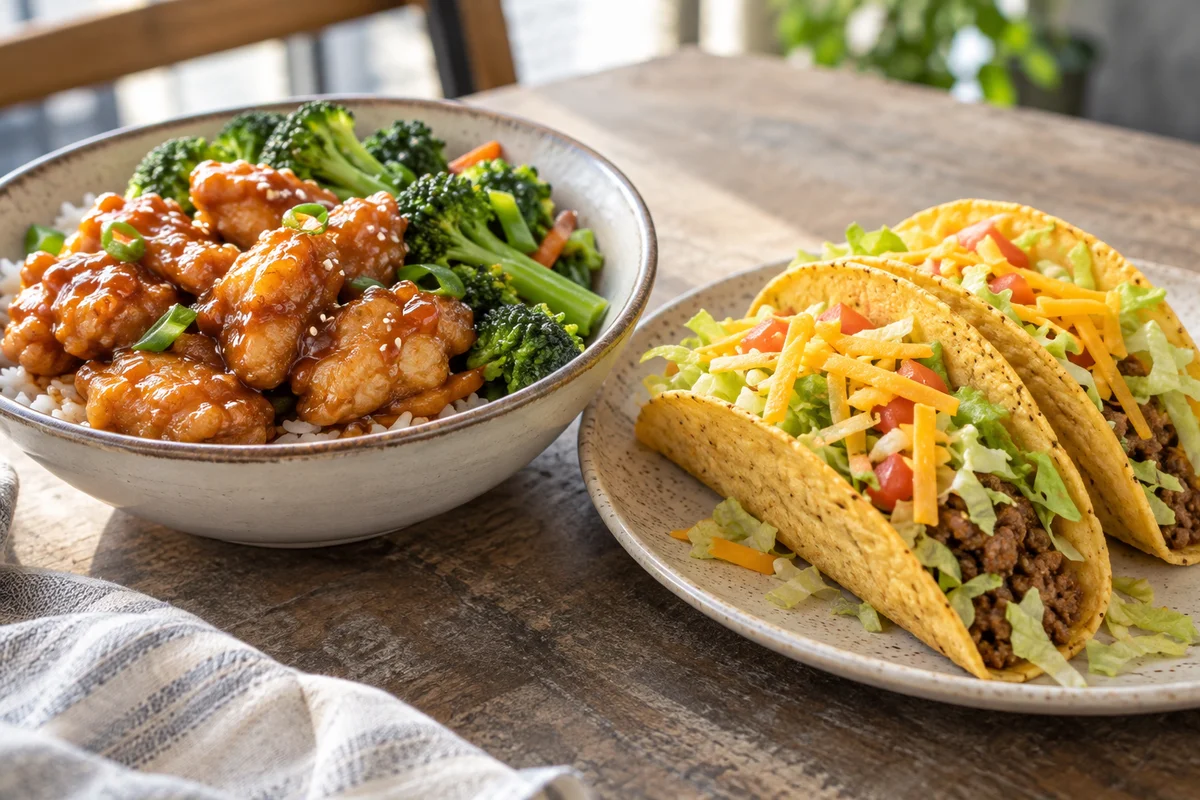
Key takeaways
- Three standard Crunchy Tacos total 510 calories before extras, using Taco Bell’s listed 170 each.
- Panda’s current nutrition table specifies serving weights; older values may refer to different portions.
- Choose the full order before comparing the brands.
At a glance
| Specified U.S. example | Calories | Method |
|---|---|---|
| Three Taco Bell Crunchy Tacos | 510 | Calculated: 3 × 170 |
| Panda Original Orange Chicken + 10 oz Super Greens | 740 | Calculated: 560 + 180 |
| Panda Grilled Teriyaki Chicken + 10 oz Super Greens | 460 | Calculated: 280 + 180 |
Named U.S. builds and published portions. Calculated totals are labeled; customizations, preparation and menu updates can change the result.
Use the serving weight printed beside the number
Panda’s current nutrition table lists Original Orange Chicken at 560 calories for 6.2 ounces, Grilled Teriyaki Chicken at 280 for 6.1 ounces, and Super Greens at 180 for a 10-ounce base serving. It also lists other greens portions separately. Do not swap those numbers without changing the portion description. These are combinations of specified table servings, not a promise that every bowl handed over at a restaurant contains exactly those weights. Check the selected order and portion when buying.
Why the two Panda examples differ
The two examples use the same published greens serving but different entrées. The orange-chicken version totals 740 calories; the teriyaki version totals 460. Neither total includes an extra sauce packet, appetizer or drink. The purpose is to show how a choice inside the same restaurant can change the comparison. It is not a rule that you must pick the smaller number. Choose a meal you want, then compare its actual ingredients and portions with your realistic alternative.
At Taco Bell, count the tacos you actually order
One Crunchy Taco is not the same amount of food as a whole Panda lunch. Taco Bell lists the standard Crunchy Taco at 170 calories, so three total 510 before extras. If your usual order is two tacos and another item, use that combination instead. Taco count makes the arithmetic easy, but it does not settle whether the meal is enough for you. A useful comparison starts with an order you would actually find satisfying rather than a token item selected to make a brand look lighter.
Sodium needs a separate comparison
Adding the Panda table values produces 1,660 mg of sodium for the specified orange-chicken-and-greens example and 1,270 mg for the teriyaki-and-greens example. Those are calculated values for the stated servings. We have not assumed a current sodium figure for the Taco Bell order; check its detailed nutrition if that is your priority. Lower calories cannot be used as a shortcut for lower sodium. An additional sauce packet should be included in whichever calculation you are using.
Rice and noodles change the portion being compared
If you normally buy rice or chow mein, a greens-only example is not your usual order. Select the actual base and use its serving size in the calculation. If you choose a mixed base, estimate the amount of each component explicitly rather than adding two full base servings. A restaurant scoop is also not a laboratory measurement. These examples are a starting point for understanding the order, and the current menu and restaurant information remain the better guide to what you are buying.
Keep the additional items on the same page
An appetizer at Panda and an additional burrito at Taco Bell both belong in the comparison. Drinks, sauces and desserts count too. Decide which extras you want before accepting the suggested bundle. You can still choose them; the point is that the final meal should match the numbers you are comparing. Otherwise you may select a restaurant based on a small example, then buy a very different lunch and wonder why the comparison no longer feels useful.
Change the convenience problem if it keeps recurring
If the choice between Panda and Taco Bell comes up every day because neither lunch nor dinner was planned, focus on the repeated moment. Keep an easy meal available or decide the order before getting very hungry. If your goal is less fast food, one convenient alternative can make the next decision easier. That response addresses why the stop happens instead of only changing the restaurant. The best starting point is usually the meal or time of day where you feel least prepared.
Frequently asked questions
Is Panda Express healthier than Taco Bell?
It depends on the complete order. These calculated examples change the calorie ranking when the Panda entrée changes.
How many calories are in three Crunchy Tacos?
Three standard Crunchy Tacos total 510 calories using the cited 170-calorie U.S. menu value, before extras.
Why are Panda Express calories different from older charts?
Published serving weights and recipes can differ. Match the portion beside the value rather than treating an older number as the current value for every serving.
Sources and method
Reviewed October 11, 2026. Older official tables are identified by their document date; consult the current ordering information for changes. This article compares specific orders and does not provide an overall health score for either chain.