
Key takeaways
- Evening cravings usually mean several things stacked at once: you are more tired, you have fewer decisions left in you, you may not have eaten enough earlier, and your brain has learned that a certain time or routine ends with food.
- Before treating every evening urge as a habit problem, check whether a normal meal sounds good; if only one very specific thing appeals, the habit loop is doing the work.
- The 10-minute rule beats a ban: “I can still order it in 10 minutes”, then change your state, because the goal is space between the urge and the action.
- Most people do not have twenty triggers, they have a small number that repeat, so tracking what happened immediately before the craving makes the problem specific enough to design around.
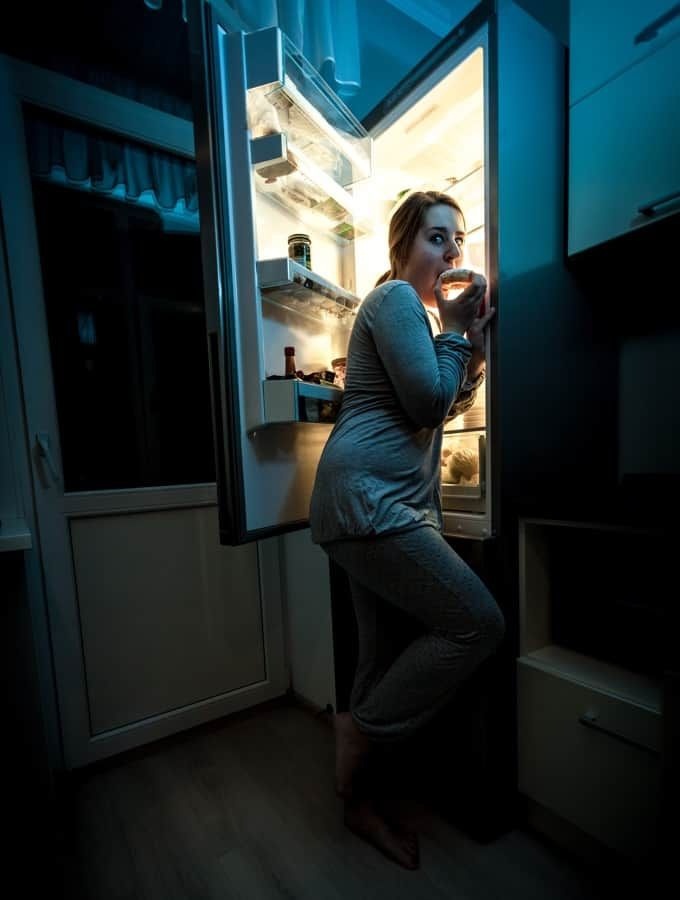
Night cravings can feel oddly predictable. You can get through the entire day without thinking much about fast food, then 9 PM arrives and suddenly the delivery app, the drive-through, or the snack in the fridge feels impossible to ignore.
That does not automatically mean you are “bad at self-control.” Evening cravings often show up because several things stack at once: you are more tired, you have fewer decisions left in you, you may not have eaten enough earlier, and your brain has learned that a certain time or routine ends with food.
Why cravings get louder at night
Cravings are not driven by one single cause. The useful question is not “Why do I have no willpower at night?” but “What is different about this part of my day?”
The clock itself can become a trigger
If you order food at roughly the same time over and over, the routine starts to become automatic. A cue appears — finishing work, closing the laptop, starting a show, getting into bed — and your brain already knows what usually follows.
This is the same basic habit pattern we cover in the science of fast food cravings: cue, craving, reward, repeat. The important part is that you do not have to wait until the craving is at full volume. You can change what happens earlier in the sequence.
First, check whether it is hunger
Before treating every evening urge like a habit problem, ask a simpler question: would a normal meal sound good right now?
If the answer is yes, you may simply be hungry. Trying to “out-discipline” genuine hunger often makes the night harder than it needs to be. A filling meal or planned snack can solve a very different problem from a craving for one specific restaurant or food.
If only one very specific thing sounds good — and the urge appeared right after a familiar cue — the habit loop may be doing more of the work.
Use the 10-minute rule
Do not make the rule “I am not allowed to have it.” That can turn one craving into a debate that lasts all night.
Try this instead: “I can still order it in 10 minutes.”
Then change your state. Leave the kitchen. Drink something. Take a shower. Walk around the block. Brush your teeth. Put the phone in another room. Eat the backup meal you planned earlier.
The goal is not to prove that cravings disappear on command. The goal is to create space between the urge and the action, so the decision is yours again.
A useful rule: make the next 10 minutes easier, not the rest of your life perfect.
Make ordering slightly harder
Delivery apps are built to remove friction: saved card, saved address, saved order, one-tap notifications. If night is your weak spot, add a little friction back.
- Move delivery apps off your home screen or delete them for a while.
- Turn off food promotion notifications.
- Log out so ordering is not one tap.
- Do not keep the phone beside you during your usual craving window.
- If a drive-through is the cue, change the route home when you can.
You are not trying to make fast food impossible. You are buying yourself a few extra seconds before autopilot wins.
Give tired-you a real alternative
The backup cannot be “cook something healthy” if you know you will not want to cook at 9 PM. It has to compete with convenience.
Keep one or two options at home that require almost no decision-making: a frozen meal you actually like, eggs and toast, a quick rice bowl, a sandwich, yogurt and fruit, or leftovers you can heat in minutes. Our guide to fast food alternatives when you are too tired to cook is built for exactly this moment.
Track the moment before the craving
For a week, do not just track whether you ordered. Track what happened immediately before you wanted to.
- What time was it?
- Where were you?
- How hungry were you?
- Were you stressed, bored, lonely or simply exhausted?
- What were you doing on your phone?
Most people do not have twenty different triggers. They have a small number that repeat. Once you can see yours, the problem becomes much more specific — and much easier to design around.
What progress actually looks like
Success is not “I never crave fast food again.” A better first win is that the craving stops making the decision for you.
Maybe you still want it, but you wait. Maybe you order two nights instead of five. Maybe you notice the cue before opening the app. Those are not tiny details; they are evidence that the loop is becoming less automatic.
If you want a broader plan for the whole habit, read how to stop eating fast food without relying on perfect motivation.
FAQ
Why are my fast food cravings worse at night?
Several things stack at once in the evening: you are more tired, you have fewer decisions left in you, you may not have eaten enough earlier in the day, and your brain has learned that a certain time or routine ends with food. Convenience becomes more valuable when effort feels expensive.
How do I stop night-time fast food cravings?
Do not make the rule “I am not allowed to have it”, because that turns one craving into a debate that lasts all night. Try “I can still order it in 10 minutes” instead, then change your state: leave the kitchen, drink something, take a shower, walk around the block, or put the phone in another room.
Is my night craving hunger or a habit?
Ask whether a normal meal would sound good right now. If the answer is yes, you may simply be hungry, and a filling meal or planned snack solves a different problem. If only one very specific thing sounds good and the urge appeared right after a familiar cue, the habit loop is doing more of the work.