
Chipotle vs Wendy’s: Which Is Healthier?
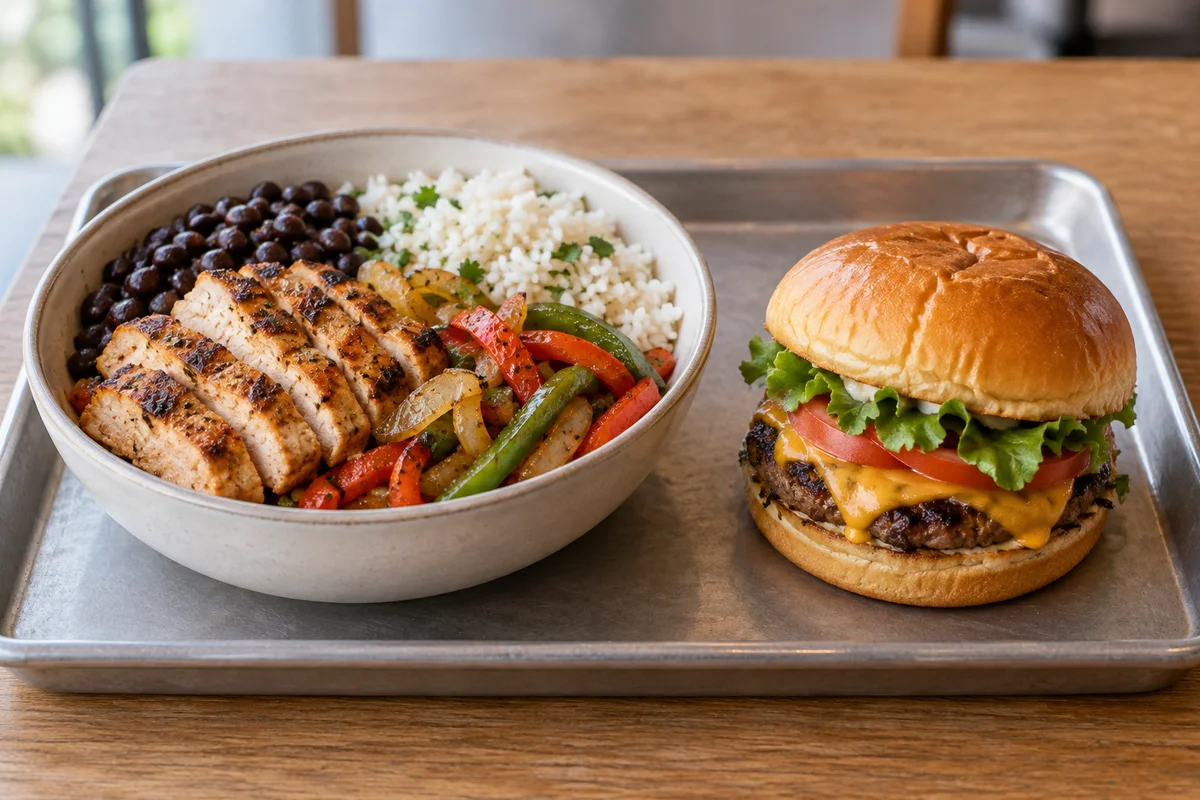
A customized Chipotle bowl and a Wendy’s burger can end up close in calories while being different meals. The comparison only becomes useful when the bowl ingredients and the burger build are explicit. Here we use a simple calculated chicken bowl and the current U.S. Dave’s Single menu figure, with clear limits on what those numbers tell us.
Key takeaways
- The specified Chipotle bowl totals 540 calories using its cited published component table.
- The current U.S. Dave’s Single order page lists 560 calories before sides.
- A 20-calorie difference is too narrow to support a broad claim that one chain is healthier.
At a glance
| Specified order | Calories | Includes |
|---|---|---|
| Chipotle chicken + white rice + black beans + fajita vegetables | 540 | Calculated component total; no salsa or toppings |
| Wendy’s Dave’s Single | 560 | Standard burger only; no side or drink |
Named U.S. builds and published portions. Calculated totals are labeled; customizations, preparation and menu updates can change the result.
What is included in the 540-calorie bowl?
The calculation uses one published serving each of chicken at 180 calories, white rice at 210, black beans at 130 and fajita vegetables at 20. It excludes salsa, cheese, sour cream, guacamole, chips and a drink. Those exclusions are part of the recipe description, not instructions that everyone should avoid the extras. If you choose a different protein or skip rice, rebuild the total. The named bowl is useful precisely because you can see what has and has not been counted.
Why the table date is visible
The bowl calculation uses Chipotle’s official July 2022 component document. That date matters: a published table is a source for its stated values, not a guarantee that every recipe and portion has stayed unchanged. Check the current Chipotle calculator for the ingredients you select. The Wendy’s value comes from its U.S. order page checked on October 11, 2026. We identify those different sources instead of presenting both as if they came from a single current standardized test.
Twenty calories do not answer the health question
The difference between 540 and 560 is 20 calories before toppings or sides. That is not a useful basis for declaring an entire restaurant healthier. Actual scoops, assembly and your choices can change the finished meal. More importantly, calorie totals leave out the foods and nutrients making up each order. Use the numbers to understand the examples rather than as a precision contest. A slightly smaller listed total does not automatically describe the meal that best fits your needs.
Beans and vegetables make the bowl a different meal
The specified bowl contains chicken, rice, beans and vegetables, while Dave’s Single is a burger with its standard toppings. These are not equal portions or matching recipes. If you care about fiber, protein, sodium or saturated fat, compare the detailed values for your exact builds. Do not borrow the nutrient total from a different bowl, and do not assume a calorie tie means every other measure is similar. Decide which question you want the information to answer before choosing the comparison.
Extras can overwhelm the narrow starting difference
A serving of chips at Chipotle or fries at Wendy’s belongs in the total if it is part of your lunch. So do queso, additional sauces and drinks. Start with the main item, then add the choices you would normally make. You may discover the biggest difference comes from your side rather than the restaurant. If you share a side, estimate the portion you expect to eat and label it as an estimate. Leaving extras out is only appropriate when you actually order without them.
A practical way to choose either order
Before reaching the counter or opening the ordering app, decide your main item, the amount you want and whether you want a side. At Chipotle, name the bowl ingredients. At Wendy’s, name the burger and any changes. This reduces the chance that the queue or bundle chooses the meal for you. The objective is an order you understand and enjoy, not a rule that a bowl is always good or a burger is always bad. Your preferences still belong in the decision.
When the bigger goal is eating less fast food
If restaurant comparisons keep turning into another order you had not planned, pay attention to the repeated trigger. You might need a quick dinner at home, a different route or an earlier lunch decision. Choose one change that is easy enough to repeat on a busy day. Swapping Wendy’s for Chipotle may change a meal without changing the routine. If the routine is the thing you want to improve, plan for the moment before you order as well as for the food itself.
Frequently asked questions
Is Chipotle lower in calories than Wendy’s?
Some builds are and some are not. The specified calculated bowl is 540 calories, compared with 560 for Dave’s Single before extras.
Does the bowl total include salsa or guacamole?
No. It includes only chicken, white rice, black beans and fajita vegetables. Add your selected toppings to describe your actual order.
Are the Chipotle values from a current menu test?
No. The component calculation uses the identified July 2022 official document. Use the current calculator to check your selected build and any changes.
Sources and method
- Chipotle — published U.S. component table (July 2022 document)
- Chipotle — current nutrition calculator
- Wendy’s — Dave’s Single, current U.S. order page
Reviewed October 11, 2026. Older official tables are identified by their document date; consult the current ordering information for changes. This article compares specific orders and does not provide an overall health score for either chain.