
Subway vs McDonald’s: Which Is Healthier?
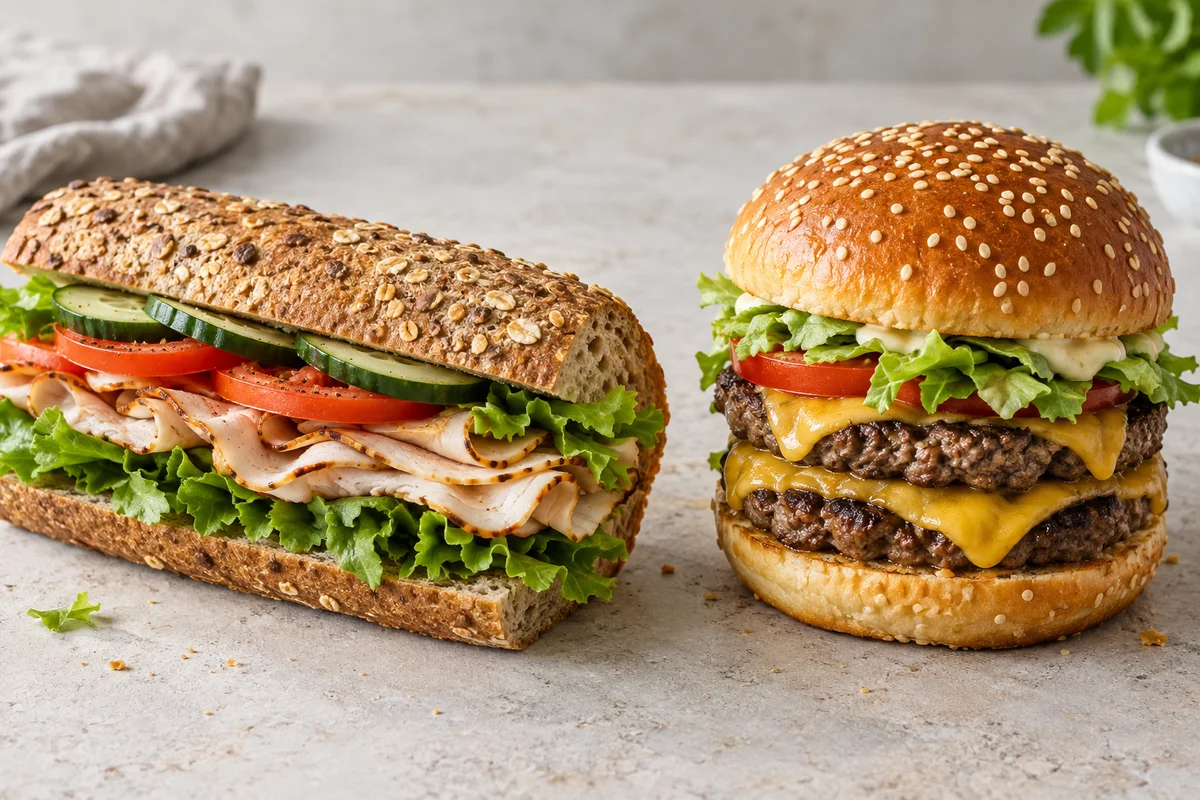
A Subway sandwich may look like the obvious lighter choice, but the bread, cheese, sauce and size still count. McDonald’s also sells many different orders. To make this question concrete, we compare Subway’s published six-inch turkey builds with a Big Mac, then explain the limits of that comparison.
Key takeaways
- Subway’s standard and Fresh Fit turkey builds have different published nutrition.
- Both six-inch turkey examples have fewer listed calories than a Big Mac, before extras.
- A smaller sandwich is not automatically a better lunch if it does not meet your needs.
At a glance
| U.S. sandwich build | Calories | Protein | Fiber |
|---|---|---|---|
| Subway 6-inch Oven-Roasted Turkey, standard table build | 470 | 25 g | 3 g |
| Subway 6-inch Oven Roasted Turkey, Fresh Fit table build | 270 | 20 g | 4 g |
| McDonald’s Big Mac | 580 | See current product details | See current product details |
Named U.S. builds and published portions. Calculated totals are labeled; customizations, preparation and menu updates can change the result.
Which Subway turkey sandwich do you mean?
Subway’s October 2026 U.S. table separates a standard six-inch turkey sandwich from the Fresh Fit build. The figures are not interchangeable. If you add cheese or mayonnaise, or choose another bread, a number for the simpler build may no longer describe your lunch. Tell yourself the complete sandwich order before searching for its nutrition: size, bread, meat, cheese, vegetables and sauce. That makes it easier to notice when a search result is answering a different question.
A Big Mac is one named burger, not the entire menu
The Big Mac is a recognizable comparison point, but it cannot represent everything McDonald’s serves. Likewise, a turkey sub cannot represent every Subway sandwich. If your real alternative is a different burger or a footlong sub, use those actual items. Our table answers a narrower question: how these named sandwiches compare on published calories. Keeping that question narrow prevents a useful example from turning into a sweeping claim that the menu data cannot support.
Lower calories and lower sodium are separate claims
Subway lists 1,120 mg of sodium for the standard turkey example and 810 mg for the Fresh Fit example. Those are build-specific figures, and the lower-calorie option still contains sodium. We are not assigning an unverified Big Mac sodium value here or assuming the ranking follows calories. If sodium is your reason for comparing lunch options, check the current detailed facts for each complete order. Include sauces and sides rather than considering only the visible meat and vegetables.
The meal often differs from the sandwich
A cookie, chips or a sweet drink at Subway belongs in the total just as fries and a drink belong in a McDonald’s order. Compare sandwiches alone if that is what you buy. Compare full meals if that is what you buy. A sandwich-only number from one restaurant and a combo number from another can manufacture a dramatic result without teaching you anything useful. Write the extras alongside the main item so they remain visible during the decision.
Make size a decision before toppings
The six-inch examples in the table should not be used as footlong figures. A larger sandwich changes the amount of food, and extra toppings change its recipe. Decide what size suits your appetite and plans first, then choose the build you enjoy. Do the same at McDonald’s by choosing the actual burger and side size. You do not need to chase the smallest available lunch. You need a comparison that describes a meal you would realistically order and eat.
Vegetables help describe the build, not a brand halo
Adding vegetables is a practical way to change a sandwich, but the sight of lettuce does not erase the bread, sauces or other ingredients. At either chain, look at the whole meal rather than one appealing feature. If you want a lunch with a particular amount of protein or fiber, check those measures directly for your chosen build. Our Subway figures show why two orders with the same meat can still differ. The name of the restaurant does not tell you the finished recipe.
A repeatable lunch plan can reduce the daily debate
If you keep searching for the healthier fast-food lunch during a rushed break, consider choosing lunch earlier in the day. Keep one convenient option available at work or nearby, and one backup for days when your original plan falls through. This is about reducing last-minute friction rather than banning a sandwich or burger. A meal you chose deliberately can fit your routine. A pattern you want to change needs a practical alternative at the time it usually happens.
Frequently asked questions
Is Subway always healthier than McDonald’s?
No. The exact sandwich, burger, size, toppings and extras determine the comparison.
How many calories are in a Subway turkey sub?
The cited U.S. table lists 470 for the standard six-inch build and 270 for the separate Fresh Fit build. Customizations change those figures.
Does this comparison include fries or chips?
No. The table compares the named sandwiches only; add the sides and drinks in your actual order.
Sources and method
Reviewed October 11, 2026. Older official tables are identified by their document date; consult the current ordering information for changes. This article compares specific orders and does not provide an overall health score for either chain.